
What’s the most iconic baseball card brand? For many collectors, the answer is instantly Topps. Since 1951, Topps has captured the history of baseball in cardboard form. Holding a vintage Topps card feels like holding a piece of the game’s past. But if you’re new to collecting, or even if you’ve collected for a while, staring at the long list of Topps sets can feel overwhelming. Which year should you chase? Which set has the best rookie cards? The sheer volume of choices often stops beginners from even starting.
Navigating the differences between Topps Flagship, Topps Chrome, and various special editions can be tricky. You want to invest your time and money wisely, but knowing where to begin your collecting journey is the biggest hurdle. This post cuts through the confusion. We will break down the most important and popular Topps Baseball Card Sets. You will learn what makes each set unique, which ones offer the best rookie card hunts, and how to decide which era fits your collecting style best.
Get ready to unlock the secrets of Topps collecting. By the end of this guide, you will have a clear roadmap for finding the perfect Topps set to start or enhance your collection. Let’s dive into the world of cardboard diamonds and discover the best sets waiting for you!
Top Topps Baseball Card Sets Recommendations

- The Complete 2025 Season in One Box: Capture all 700 base cards from 2025 Topps Baseball Series 1 and Series 2 in this factory-sealed box set, a true collector’s cornerstone. Every card, every rookie, every team—together in one definitive baseball card set built for both new and seasoned collectors. This is the most accessible way to experience the full 2025 Topps baseball card checklist—rookies, veterans, combo cards, league leaders, and team cards all included.
- Short Print Rookie Exclusives – Cards 698–700: This Topps baseball complete set is the sure place to find the short print rookie cards of Cam Smith, Kristian Campbell, and Matt Shaw—numbered #698, #699, and #700 in the full base checklist. These rookie cards close the set with exclusivity and highlight three breakout names already turning heads in Major League Baseball.
- Bonus Photo Variation Rookie Pack Inside: Each factory-sealed baseball card box includes a 5-card retail-exclusive pack featuring rookie image variations of 2025’s collectible stars. Look for alternate baseball cards of players like Roki Sasaki—one of the year’s hottest names—alongside other new additions from this stacked MLB rookie class.
- All the Stars, All in One Place: From legends like Mike Trout, Shohei Ohtani, and Aaron Judge to rising stars like Julio Rodríguez, Ronald Acuña Jr., and Fernando Tatis Jr., this set of baseball trading cards is loaded with names that define the season. Collect Future Stars, including Elly De La Cruz, Jackson Holliday, and Yoshinobu Yamamoto, plus League Leaders, Combo Cards, and Team Cards from the Los Angeles Dodgers, Baltimore Orioles, New York Mets, and more.
- A Collector’s Set Built on Legacy: Whether you’re a longtime baseball card collector, building for display, passing down a full set, or just starting your journey in sports trading cards, the 2025 Topps baseball complete set is where it all comes together. Every base card brought together in one complete set that honors the tradition of Topps baseball collecting.
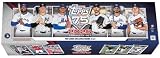

- Configuration: 704 Cards Set
- Look for 1 complete 700-card set from 2026 Topps Series 1 Baseball and 2026 Topps Series 2 Baseball and 4 short printed rookie cards per box set.


- 2026 Topps Baseball Complete Set
- 75th Anniversary
- Factory Sealed
The Ultimate Buying Guide to Topps Baseball Card Sets
Collecting Topps baseball cards is a fun hobby. Topps has made cards for many years. This guide helps you pick the right set. We will look at what makes a good set.
Key Features to Look For
When you buy a Topps set, check these things first. These features tell you a lot about the set’s value and fun factor.
Rookie Cards (RCs)
- Rookie Cards are very important. These are the first cards of a player.
- Look for sets with rookie cards of future Hall of Famers. These cards often become more valuable.
- A strong rookie class makes a set exciting to open.
Inserts and Parallels
- Inserts are special, extra cards in the packs. They often have cool designs or feature great players.
- Parallels are colored or shiny versions of the regular cards. Some parallels are very rare.
- Sets with many different kinds of inserts and parallels keep collecting interesting.
Checklist Size and Player Selection
- Some sets have many more cards than others. Bigger sets mean more variety.
- Make sure the set includes star players you like. You want to find your favorite players!
Important Materials and Quality
The way the cards are made matters. Good materials mean the cards last longer.
Card Stock (The Card Material)
- Most modern Topps cards use sturdy cardboard. This material protects the image well.
- Older vintage cards (from the 1950s and 60s) use thinner paper. Handle these very carefully.
- Thicker card stock feels more premium.
Print Quality and Ink
- Look closely at the picture printing. Clear, bright colors are best.
- Poor print quality shows up as blurry images or colors that run together. Good ink stays sharp.
Factors That Improve or Reduce Quality
Some things make a set better or worse for collectors.
Factors that Improve Quality
- Licensing: Topps has the official license for Major League Baseball (MLB). This means the cards have real team logos and player uniforms. Unlicensed sets are usually less desired.
- Short Prints (SPs): Sometimes, a few cards are printed in much smaller numbers. Finding these rare cards adds excitement.
- Autographs and Relics: Higher-end sets might include signed cards (autographs) or pieces of game-used jerseys (relics). These features significantly boost a set’s appeal.
Factors that Reduce Quality
- “Junk Wax Era” Sets (Mid-1980s to Early 1990s): During this time, companies printed way too many cards. Most of these sets are not valuable today because almost everyone has them.
- Damaged Packaging: If the box or pack wrapper is torn or crushed, the cards inside might have damage, like bent corners.
User Experience and Use Cases
Why are you buying these cards? Your goal changes what set you should choose.
For Fun Collecting and Set Building
- If you like putting every card in a set together, buy complete factory-sealed sets. This saves you from hunting for individual cards.
- Choose modern “base” sets (like Topps Series 1, 2, or Update). These are easy to find and fun to complete.
For Investment Potential
- Focus on recent years’ flagship products (the main Topps release). These contain the most important rookie cards.
- Buy unopened boxes of highly anticipated products. People hope to find rare autographs or rookie cards inside.
Collecting Topps cards offers something for everyone. Know what you want, check the key features, and enjoy the hunt!
10 Frequently Asked Questions (FAQ) About Topps Baseball Card Sets
Q: What is the difference between Topps Series 1, 2, and Update?
A: These three sets make up the main yearly release. Series 1 comes out early in the year. Series 2 follows later. The Update set comes out near the end and includes mid-season trades and rookies who weren’t in the first two sets.
Q: Are old Topps cards always worth more money?
A: No. Condition is key. A perfect card from 1985 is usually worth less than a perfect rookie card from 2011. Vintage cards (pre-1970) are often valuable, but only if they are in great shape.
Q: What does “Hobby Box” mean?
A: A Hobby Box is a special box sold only in local card shops or specialty stores. Hobby Boxes usually have better odds of finding rare items like autographs or limited parallels compared to “Retail Boxes” found in big chain stores.
Q: What is a “Base Card”?
A: The Base Card is the standard, most common card in the set. It features the main design for that year. Everyone starts by collecting these.
Q: How should I store my new Topps cards?
A: Store them in penny sleeves first, then put them into a top loader or a 9-pocket binder page. Keep them away from direct sunlight and humidity. Protect those corners!
Q: What makes a card “Graded”?
A: Grading means a professional company (like PSA or Beckett) checks the card’s condition and gives it a score from 1 (poor) to 10 (gem mint). A high grade significantly increases value.
Q: Should I buy sealed boxes or individual cards?
A: If you want the thrill of opening packs, buy sealed boxes. If you need specific players, buying individual cards is cheaper and guarantees you get what you want.
Q: What is the importance of the Topps logo?
A: The Topps logo shows that the card is officially licensed by the MLB Players Association. This official status is vital for collectors and value.
Q: What is a “Short Print” (SP) card in modern Topps sets?
A: An SP card is an officially part of the set but is printed much less often than the regular cards. They are harder to find and collectors often seek them out.
Q: When is the best time to buy a new Topps set?
A: Usually, right when the first series releases in the spring, or wait until the Update set releases late in the year. Prices often drop slightly after the initial hype fades.