
Have you ever watched a professional penhold player dance around the table with lightning-fast wrist flicks? There is something truly hypnotic about the way they control the ball with such precision. While the shakehand grip is common, the penhold style offers a unique advantage in creativity and close-to-the-table speed. It feels like an extension of your own hand, but mastering it starts with one crucial decision: picking the right racket.
Choosing the perfect blade can feel like a headache. You have to consider blade shape, handle style, and the specific wood layers. Many players waste money on rackets that feel too heavy, too stiff, or simply awkward in their grip. It is easy to get lost in technical jargon when you just want a setup that plays well. Without the right gear, your training sessions can quickly turn into a frustrating battle against your own equipment.
This guide cuts through the confusion. We will break down exactly what makes a penhold racket great and how to match one to your personal playing style. You will learn the differences between Japanese and Chinese styles, how weight affects your loops, and which materials provide the best “feel.” Whether you are a beginner or looking to upgrade your current setup, you will walk away with the confidence to choose a blade that fits your game perfectly. Let’s dive into the details and find your next winning racket.
Top Penhold Table Tennis Racket Recommendations

- ADVANCED COMPETITIVE PERFORMANCE - Designed for tournament and high-level recreational players. This professional ping pong paddles delivers explosive power, precise ball placement, and devastating spin tailored for aggressive penhold playstyles.
- HURRICANE 3 & TINARC RUBBERS - Dominate with a legendary hybrid setup. The classic tacky Hurricane 3 forehand delivers massive spin and traditional Chinese looping power, while the elastic TinArc backhand snaps back instantly for rapid blocks and flick attacks.
- 5-PLY PURE WOOD BLADE - Engineered with a classic 5-layer wood construction. This precise architecture provides crisp vibration feedback, ensuring superior ball control and a highly stable sweet spot for intense, high-speed rallies.
- TRADITIONAL PENHOLD GRIP - Designed specifically for the classic penhold (CS) playstyle. The masterfully crafted short handle offers exceptional wrist flexibility, providing perfect leverage for devastating serves and quick over-the-table attack
- DOUBLE HAPPINESS DHS & ITTF APPROVED - As the official equipment provider for world-class events, Double Happiness DHS delivers unparalleled authenticity. Equipped with ITTF-certified rubbers, this racket meets the strict standards required for official tournament match play.

- Nakama Series | Recommended For Advanced Level Players
- 5 Ply-Wood | Sriver Rubber & 1.9mm sponge | Rubber & mm sponge
- Japanes Penhold - Cork Mounted On The Top Of THe Handle For A More Comfortable Grip
- Speed Rating: 99.5 | Spin Rating: 79.5 | Control Rating: 39.5
- USA Table Tennis Approved & International Table Tennis Federation Approved For Tournament Play
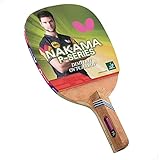
- Great speed and better spin for advanced players
- BLADE: Penhold grip
- 2 poly balls: 2-40+ poly balls are included
- RUBBER: Flextra 1.7mm Red
- Ratings: speed 81.5, spin 86.5, control 60.5
The Ultimate Guide to Choosing a Penhold Table Tennis Racket
Choosing the right penhold table tennis racket can change your entire game. Unlike the shakehand style, the penhold grip requires a specific racket shape and handle design. Whether you are a beginner or a pro, finding the perfect paddle helps you control the ball and hit powerful shots.
Key Features to Look For
When you shop for a penhold racket, check the blade shape first. Most players prefer a “Japanese” square shape for speed or a “Chinese” round shape for better control. You must also check the handle type. The handle should feel comfortable in your hand. Common styles include the Japanese penhold (JP) handle, which sticks out, and the Chinese penhold (CP) handle, which is shorter and rounded.
Important Materials
- Wood Layers: Most blades use layers of wood. Soft wood gives you more control, while hard wood adds speed.
- Carbon Fiber: Many modern rackets add carbon layers. Carbon makes the blade lighter and faster.
- Rubber: The rubber surface determines your spin. High-quality rubber grips the ball and helps you create heavy topspin.
Factors That Affect Quality
Quality usually depends on the construction of the blade. A high-quality racket has a consistent feel across the entire surface. If you hit the ball near the edge, a good racket will still perform well. Cheap rackets often vibrate too much, which makes it hard to aim. Also, look for well-glued rubber. If the rubber peels away from the wood, your shots will lose accuracy.
User Experience and Use Cases
Penhold rackets are great for players who want to dominate at the table. If you love quick movements and strong forehand attacks, this style is for you. Beginners should start with a wooden blade that has good control. Advanced players often switch to carbon blades to increase their speed. Remember, the penhold style requires a lot of wrist movement, so choose a racket that feels balanced in your palm.
10 Frequently Asked Questions
Q: Can I use a regular shakehand racket for a penhold grip?
A: No, shakehand rackets have long handles that get in the way of your fingers. You need a dedicated penhold racket for the right balance.
Q: What is the main difference between Japanese and Chinese penhold?
A: Japanese blades are usually thicker and faster. Chinese blades are rounder and better for all-around play.
Q: Does the weight of the racket matter?
A: Yes. A lighter racket is easier to move quickly. A heavier racket provides more power for your smashes.
Q: Should I buy a pre-assembled racket or build my own?
A: Beginners can buy pre-assembled rackets. Advanced players should buy a blade and rubber separately to get the best performance.
Q: How often should I replace my rubber?
A: If the rubber looks shiny or feels slippery, it is time for a change. Most players replace it every 3 to 6 months.
Q: Are carbon blades better than wooden ones?
A: Carbon blades are faster, but wooden blades offer better “feel.” Choose wood if you are a beginner learning to control the ball.
Q: How do I clean my racket?
A: Use a specialized racket cleaner and a sponge. Never use soap or harsh chemicals, as they can ruin the rubber.
Q: Why do some penhold rackets have rubber on both sides?
A: Modern penhold players use “reverse penhold backhand” (RPB). This allows them to hit backhands with the other side of the paddle.
Q: Is a penhold racket harder to learn?
A: It can be tricky at first. However, it offers great agility for players who enjoy fast-paced games.
Q: What is the best way to store my racket?
A: Keep it in a protective case away from direct sunlight and heat. This prevents the rubber from drying out.