
So, how do you get recruited for college baseball? You need to perform well on the field, get noticed by coaches, understand the eligibility rules, and actively market yourself. Can you get recruited if you’re not a top prospect? Yes, absolutely, especially if you target the right level of college baseball. Who is involved in the college baseball recruiting process? It’s you, your parents, coaches, and college recruiters.
The journey to playing college baseball is a dream for many young athletes. It requires dedication, skill, and a strategic approach to navigating the college baseball recruiting landscape. Whether you aspire to play in a Division I program or find a fit at a JUCO, the fundamental steps remain similar, focusing on showcasing your abilities and making informed decisions. This guide aims to demystify the baseball recruiting process and provide actionable steps to help you achieve your goal.
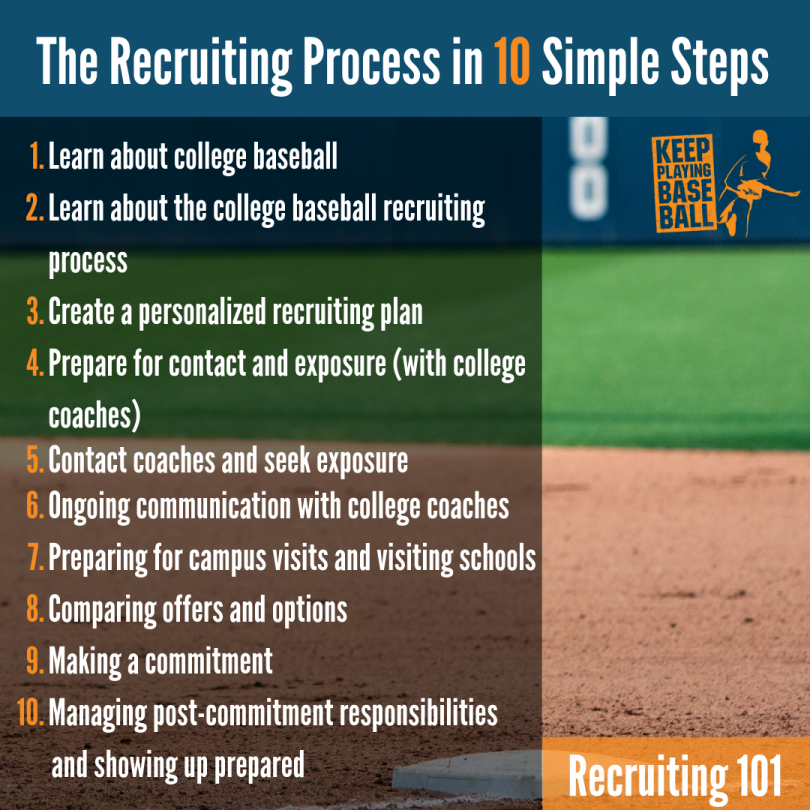
Image Source: keepplayingbaseball.org
Getting on the Radar: Early Preparation is Key
The baseball recruiting process doesn’t start in your junior year of high school. In fact, the earlier you begin to prepare, the more opportunities you’ll create for yourself. This involves consistent effort both on and off the field, as well as developing a clear understanding of what colleges are looking for.
Developing Your Skills: The Foundation of Recruitment
At its core, college baseball recruitment is about talent. Coaches are looking for players who can contribute to their program’s success. This means dedicating yourself to constant improvement.
- Consistent Practice: Regular, focused practice is non-negotiable. Work on your hitting, fielding, throwing, and pitching. Identify your weaknesses and dedicate extra time to improving them.
- Strength and Conditioning: Baseball demands athleticism. A solid strength and conditioning program will improve your power, speed, agility, and arm strength, reducing the risk of injury.
- Baseball IQ: Beyond physical skills, a smart player is a valuable player. Learn the game – understand situational hitting, defensive positioning, and game strategy. Watch college and professional games with a critical eye.
Building a Strong Academic Record: More Than Just the Diamond
Colleges recruit the whole student-athlete, not just the baseball player. Your academic performance is a critical component of your NCAA baseball eligibility and can open doors to scholarships.
- Focus on Grades: Maintain good grades throughout high school. This demonstrates discipline and commitment, qualities that coaches look for.
- Standardized Tests: Prepare for and take standardized tests like the SAT or ACT. Good scores can significantly enhance your academic profile and make you eligible for more scholarship opportunities.
- Challenging Coursework: Taking advanced placement (AP) or honors courses shows colleges you are academically prepared for the rigors of college coursework.
Showcasing Your Talent: Getting Seen by Coaches
Once you’ve laid the groundwork with skill development and academic achievement, it’s time to get noticed. This involves actively putting yourself in front of college coaches.
The Role of Travel Ball and Showcases
Playing on a competitive travel ball team is often a crucial part of the college baseball recruiting experience. These teams typically compete in tournaments where college coaches regularly attend.
- Travel Ball Benefits:
- Exposure: Play against top competition and gain exposure to a wider range of college programs.
- Coaching: Receive high-level coaching that can further develop your skills.
- Networking: Connect with players and coaches from different regions.
- Baseball Recruiting Showcases: These events are specifically designed to put players in front of college coaches.
- What to Expect: Showcases often involve skills testing (e.g., 60-yard dash, throwing velocity, exit velocity), live gameplay, and opportunities for coaches to evaluate talent efficiently.
- Choosing the Right Showcase: Research showcases to ensure they attract the type of college programs you are interested in. Look for events with a good track record of placing players.
- Making the Most of Showcases: Be prepared. Have your recruiting video baseball ready, know the coaches’ names if possible, and present yourself professionally.
Creating a Compelling Recruiting Video
A well-made recruiting video baseball is an essential tool for any aspiring college baseball player. It provides coaches with a concise yet comprehensive look at your abilities.
- Key Components of a Recruiting Video:
- Introduction: Clearly state your name, high school, graduation year, and primary positions.
- Hitting: Showcase a variety of at-bats against different pitching types. Include clips of both game situations and batting practice if necessary. Highlight power, contact, and approach.
- Fielding: Demonstrate your skills at your primary position(s). Show your range, glove work, footwork, and throwing accuracy. If you play multiple positions, include clips for each.
- Throwing: For pitchers, this is paramount. Include clips showing your mechanics, velocity, different pitches, and control. For position players, show your arm strength and accuracy from your defensive position.
- Running: Include a clip of your 60-yard dash.
- Game Footage: Prioritize game footage over just practice clips, as it shows how you perform under pressure.
- Tips for Filming:
- Quality Matters: Use clear, stable footage. Avoid shaky cameras or poor lighting.
- Showcase Your Best: Edit the video to highlight your strongest plays and abilities.
- Keep it Concise: Aim for 3-5 minutes. Coaches have limited time.
- Player Identification: Clearly identify yourself on screen (e.g., by jersey number).
Navigating the College Baseball Landscape
Once you’ve started to gain traction, you’ll need to understand the different types of college baseball programs and how to approach them.
Understanding NCAA Divisions and NAIA
The world of college sports is structured into different divisions, each with its own set of rules and competition levels.
- NCAA Division I: The highest level of collegiate athletics, offering the most competitive play and often the largest athletic scholarships baseball. Programs are typically well-funded with extensive facilities and coaching staffs.
- NCAA Division II: A strong level of competition, offering many scholarship opportunities. DII programs strike a balance between athletics and academics.
- NCAA Division III: This division does not offer athletic scholarships, but many student-athletes choose DIII for its emphasis on academics and a less intense athletic commitment. Financial aid is still available through academic and need-based programs.
- NAIA Baseball Recruitment: The National Association of Intercollegiate Athletics (NAIA) offers another avenue for college baseball. NAIA schools often provide a competitive baseball environment with opportunities for scholarships. The eligibility requirements differ slightly from the NCAA.
JUCO Baseball Recruiting: A Valuable Pathway
Junior colleges (JCs) or community colleges offer a fantastic option for many players. JUCO baseball recruiting can be a springboard to a four-year university.
- Benefits of JUCO:
- Develop Skills: Allows players to continue developing their game in a competitive environment while gaining academic credits.
- Transfer Opportunities: Many JUCO players successfully transfer to NCAA or NAIA four-year programs, often with significant scholarship offers.
- Affordability: JUCOs are generally more affordable than four-year institutions.
- Recruiting Focus: JUCO coaches actively recruit players who may have been overlooked or need more development time.
The Importance of Targeting the Right Fit
Not every program is the right fit for every player. It’s crucial to research and identify schools that align with your academic, athletic, and personal goals.
- Consider Program Level: Are you looking for a top-tier DI program or a more balanced approach at a DII or NAIA school?
- Academic Fit: Does the school’s academic reputation and specific programs meet your needs?
- Coaching Staff: Research the coaching staff. Do they have a good track record? Do their coaching philosophies align with yours?
- Campus Culture: Visit campuses if possible. Does the environment feel right for you?
Actively Marketing Yourself: Taking Control of Your Future
Being a great player is only part of the equation. You need to be proactive in making sure coaches know who you are.
Crafting Your Player Profile and Resume
Think of your player profile as your baseball resume. It’s a concise document that gives coaches essential information about you.
- Key Information to Include:
- Contact Information (Player and Parent)
- High School Information
- Graduation Year
- GPA and Standardized Test Scores
- Primary and Secondary Positions
- Key Baseball Stats (e.g., batting average, ERA, velocity, pop time)
- Academic Achievements and Extracurricular Activities
- List of Colleges You’re Interested In
- Link to Your Recruiting Video Baseball
Building Relationships with Coaches
Direct communication is vital. Don’t wait for coaches to find you; reach out to them.
- Initial Contact: Send a polite, professional email introducing yourself. Include your player profile and a link to your recruiting video.
- Follow-Up: If you don’t hear back, send a polite follow-up email after a couple of weeks. Keep them updated on your progress, new stats, or notable performances.
- College Baseball Tryouts: Some programs hold open college baseball tryouts. If you are in the vicinity of a school and are eligible to try out, this can be a great opportunity to show your skills in person. However, many programs prefer to scout players at tournaments and showcases.
- Utilizing a Baseball Recruiting Advisor: For players who feel overwhelmed by the process, a baseball recruiting advisor can offer valuable guidance. They can help identify suitable programs, refine your marketing materials, and provide strategic advice on contacting coaches. However, it’s crucial to choose a reputable advisor and remember that they are there to facilitate your efforts, not do the work for you.
The Eligibility Maze: NCAA and NAIA Requirements
Understanding the rules and regulations governing college baseball recruiting is crucial to avoid any missteps.
NCAA Baseball Eligibility Center
Before you can compete at an NCAA institution, you must register with the NCAA Eligibility Center.
- What the Eligibility Center Does: It verifies your academic eligibility to participate in college sports.
- Key Requirements (General):
- Core Courses: Complete a specific number of core English, math, science, social science, and foreign language courses.
- GPA: Achieve a minimum GPA in these core courses.
- Standardized Tests: Earn a minimum score on the SAT or ACT that aligns with your GPA.
- When to Register: It’s recommended to register during your sophomore or junior year of high school.
- NCAA Baseball Eligibility: Specific requirements can vary, so always consult the official NCAA website for the most up-to-date information.
NAIA Eligibility Standards
NAIA baseball recruitment has its own set of eligibility standards, which are often slightly different from the NCAA.
- Key Differences: NAIA programs may have different core course requirements or GPA minimums. They also have their own eligibility center.
- Importance of Checking: Always verify the specific eligibility requirements for NAIA institutions you are interested in.
Financial Aid and Athletic Scholarships Baseball
Many aspiring players hope for athletic scholarships baseball can provide. While not all programs offer full scholarships, financial aid is available in various forms.
- Scholarship Availability: Division I and Division II programs are most likely to offer athletic scholarships. Division III programs do not. NAIA programs also offer scholarships.
- Factors Influencing Scholarships:
- Talent Level: Higher-level talent generally commands more scholarship opportunities.
- Program Needs: Schools often recruit players to fill specific needs on their roster.
- Academic Performance: Strong grades can lead to academic scholarships, which can be combined with athletic aid.
- Negotiation: Be prepared to discuss scholarship offers.
- Beyond Athletic Scholarships:
- Academic Scholarships: Pursue academic scholarships through the universities themselves or external organizations.
- Grants and Loans: Explore federal and institutional grants and student loans.
- Need-Based Aid: Apply for financial aid through the Free Application for Federal Student Aid (FAFSA).
The Recruitment Timeline: When to Expect Contact
The baseball recruiting process doesn’t happen overnight. It’s a marathon, not a sprint, with different phases of activity.
- Early Identification (Freshman-Sophomore Year): Coaches may start noticing talented players during this time, often at showcases or through general observation. You should be focusing on skill development and academics.
- Initial Contact and Evaluation (Junior Year): This is typically when coaches begin making direct contact, attending more games, and evaluating potential recruits. Sending out your initial recruiting materials and recruiting video baseball is crucial here.
- Commitment Period (Junior-Senior Year): Many players make their college commitments during their junior or senior year. Early offers can come from DI programs, while DII, DIII, and NAIA programs may offer later.
- Senior Year and Beyond: For players who haven’t committed, there are still opportunities in their senior year and even through JUCO baseball recruiting pathways.
Making the Decision: Choosing Your College Home
Committing to a college is a significant decision that impacts your academic and athletic future.
- Visiting Campuses: If possible, visit the campuses of schools that have shown interest in you. This gives you a feel for the team environment, facilities, and overall college experience.
- Talking to Current Players: Ask to speak with current players on the baseball team. They can offer valuable insights into the coaching staff, team culture, and daily life as a student-athlete.
- Reviewing the Offer: Carefully review any scholarship offers. Ensure you understand the terms and conditions.
- Trust Your Gut: Ultimately, choose a place where you feel you can thrive both academically and athletically, and where you feel comfortable.
Frequently Asked Questions (FAQ)
Q1: When should I start actively recruiting myself for college baseball?
A: It’s beneficial to start preparing early, ideally during your freshman or sophomore year of high school. You should begin actively marketing yourself and sending out recruiting materials during your sophomore or junior year.
Q2: How important is my GPA and test scores for college baseball recruitment?
A: Your GPA and test scores are extremely important. They are critical for NCAA baseball eligibility and can significantly impact your opportunities for athletic scholarships baseball. Many coaches will not recruit players who do not meet academic standards.
Q3: Can I get recruited if I play for a high school team only and not travel ball?
A: While travel ball and baseball recruiting showcase events provide more exposure, it is still possible to get recruited playing for your high school team. However, you will need to be very proactive in sending your recruiting video baseball and contacting coaches directly, as well as potentially attending college camps.
Q4: What’s the difference between NCAA and NAIA baseball recruitment?
A: The primary differences lie in the governing bodies, eligibility requirements, and the overall scope of programs. NCAA has Divisions I, II, and III, each with different rules regarding scholarships and athletic emphasis. NAIA is a separate association with its own set of rules and eligibility standards.
Q5: How can a baseball recruiting advisor help me?
A: A baseball recruiting advisor can assist by helping you identify appropriate college programs based on your profile, refining your resume and recruiting video baseball, and guiding you on effective communication strategies with college coaches. They offer expertise in navigating the complex baseball recruiting process.
Q6: Should I commit to the first college that offers me a scholarship?
A: It’s generally advisable to explore all your options and wait to see what other opportunities might arise, especially if you are a highly sought-after player. However, if a particular program is your absolute top choice and the offer is strong, committing can provide peace of mind. Always ensure the offer is in writing.
Q7: What should I do if I don’t get recruited by a Division I school?
A: Don’t get discouraged! Many excellent players find great opportunities at Division II, Division III, NAIA, or JUCO baseball recruiting programs. These levels still offer competitive baseball and can be stepping stones to further success. Focus on finding the best fit for your academic and athletic goals.
The path to playing college baseball is challenging but incredibly rewarding. By focusing on skill development, academics, strategic self-marketing, and a thorough understanding of the college baseball recruiting landscape, you can significantly increase your chances of playing at the next level. Good luck!