
In a standard baseball game, there are three outfielders. These players are positioned in the large grassy area beyond the infield, commonly referred to as “the outfield.”
Baseball is a game of strategy and specific player roles. One of the most visible and exciting areas of the field is the outfield. The players here, known as outfielders, have a crucial part to play in both defense and, at times, offense. Let’s dive into the specifics of these vital members of a baseball team.
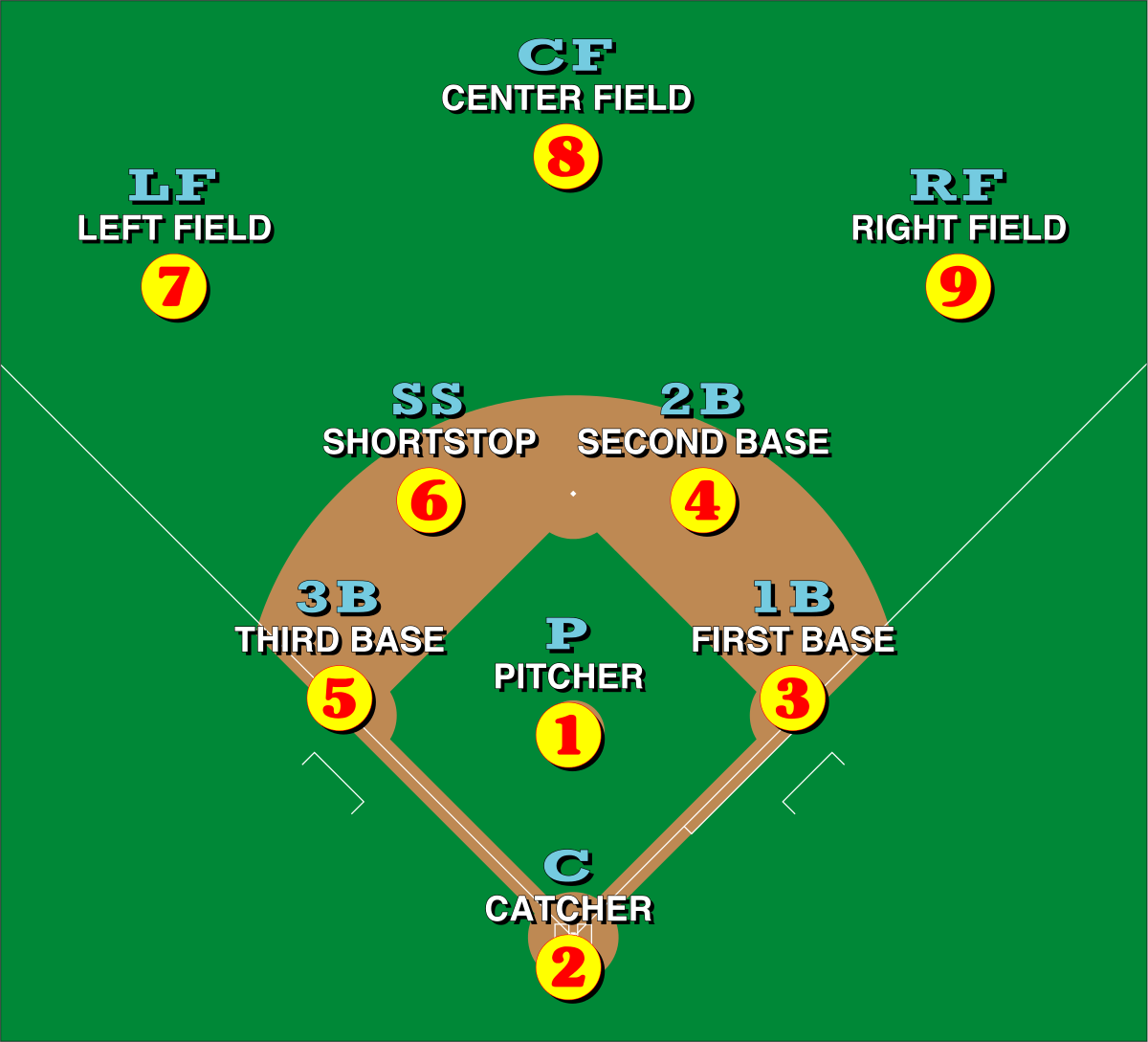
Image Source: upload.wikimedia.org
The Field of Play and the Outfield
Before we talk about the number of outfielders, it’s important to understand where they play. The baseball field is divided into two main sections: the infield and the outfield.
- Infield: This is the dirt-covered area closest to home plate, where the bases are located. It includes the pitcher’s mound, home plate, first base, second base, third base, and the areas around them.
- Outfield: This is the expanse of grass beyond the infield. It is bordered by the foul lines that extend from home plate through first and third base. The outfield is much larger than the infield and requires players with different skill sets.
The Three Positions of the Baseball Outfield
Within the outfield, there are three distinct positions, each with its own specific responsibilities. These positions are determined by where the player stands on the field.
Left Field Baseball
The player positioned in left field is responsible for the area from the foul line at third base down to the center fielder. Historically, left fielders were often left-handed batters, as they would have a shorter throw to first base after fielding a ball hit to them.
- Primary Responsibilities:
- Fielding ground balls and line drives hit into left field.
- Catching fly balls hit into left field.
- Making accurate throws to infielders or cutting off runners to prevent them from advancing.
- Backing up throws from other outfielders or infielders.
Center Field Baseball
Center field is considered the deepest and often the most challenging outfield position. The center fielder covers the largest area of the outfield, from the boundary of left field to the boundary of right field. This position demands exceptional speed, range, and a strong arm.
- Primary Responsibilities:
- Covering the greatest amount of territory.
- Catching deep fly balls, including those hit over the fence.
- Fielding balls hit into gaps between outfielders.
- Communicating with and directing the other outfielders.
- Making strong throws to home plate, third base, or second base to prevent runs.
Right Field Baseball
The right fielder plays in the area from the foul line at first base down to the center fielder. Similar to left field, right fielders often also have a strong throwing arm, especially if they are right-handed hitters, as they have a shorter distance to throw to third base or home plate.
- Primary Responsibilities:
- Fielding ground balls and line drives hit into right field.
- Catching fly balls hit into right field.
- Making accurate throws to infielders, particularly to third base.
- Supporting the center fielder and backing up plays.
Outfielders in a Baseball Team: The Core Three
When discussing the baseball outfield positions, it’s essential to remember that these three players—left fielder, center fielder, and right fielder—form the core of the outfield defense. They are the dedicated players who patrol the vast grassy areas of the ballpark.
The Importance of Outfielders and Defensive Alignment
The outfielders and defensive alignment are critical to a baseball team’s success. A well-positioned and skilled outfield can prevent extra-base hits, make spectacular catches, and cut down runners attempting to advance.
- Communication is Key: Outfielders must constantly communicate with each other. This includes calling for fly balls (“I got it!”) to avoid collisions and signaling to each other about where to position themselves based on the batter and the situation.
- Reading the Ball: Outfielders need to be able to read the trajectory and speed of batted balls. This allows them to get a jump on the ball and position themselves correctly for a catch or to field a ground ball.
- Range and Speed: The ability to cover a lot of ground quickly is paramount for outfielders, especially for the center fielder. Speed allows them to get to balls that might otherwise fall for hits.
- Arm Strength and Accuracy: A strong and accurate throwing arm is vital for outfielders. They need to be able to throw the ball quickly and precisely to the correct base to prevent runners from advancing or to throw runners out.
Number of Outfielders on a Baseball Roster
A typical Major League Baseball (MLB) roster consists of 26 players. Within this roster, there will be several players who can play outfield positions. While only three outfielders are on the field at any given time, a team will typically carry four to five players who are primarily outfielders. This allows for:
- Substitutions: Managers can make defensive or pinch-hitting substitutions to exploit matchups or give players a rest.
- Injuries: Having backup outfielders is crucial in case of injuries.
- Versatility: Many players on a roster are “utility players” who can play multiple positions, including the outfield. This provides flexibility for the manager.
Standard Baseball Outfielders and Their Skills
The players who fill these three outfield positions are known as standard baseball outfielders. While each position has its unique demands, certain general skills are expected of all outfielders:
- Speed: Essential for covering ground and chasing down fly balls.
- Agility: The ability to change direction quickly and react to unpredictable bounces.
- Hand-Eye Coordination: Crucial for catching fly balls and fielding grounders cleanly.
- Throwing Accuracy and Strength: To make strong, accurate throws to the correct bases.
- Baseball IQ: Knowing where to position oneself, anticipating plays, and understanding game situations.
Outfield Responsibilities Baseball: Beyond Just Catching
The outfield responsibilities baseball extends beyond simply catching a batted ball. Outfielders are the last line of defense and play a significant role in limiting baserunner advances.
- Preventing Extra Bases: A key job of an outfielder is to prevent singles from turning into doubles or triples, and doubles from becoming home runs. This is achieved through good positioning, range, and quick reactions.
- Cutting Off Runners: When a ball is hit into the outfield and is not caught in the air, the outfielders must field it cleanly and make a strong throw to the nearest infielder. This “cutoff man” concept is vital to stop runners from advancing an extra base. The outfielders communicate with infielders to determine the best cutoff point.
- Backing Up Plays: Outfielders are also responsible for backing up plays that happen in the infield or on the bases. For example, if a throw from the catcher to first base is wild, the right fielder might be positioned to retrieve the ball and prevent the batter from advancing further.
- Shifting: In modern baseball, defensive shifts are common. Outfielders may be moved to different positions on the field based on the batter’s tendencies and the game situation. For instance, an outfielder might be shifted towards the pull-hitting side of the field to prevent hits.
The Six Defensive Positions in Baseball
To provide a complete picture, it’s helpful to list all the baseball team positions. There are nine defensive positions in total.
- Pitcher: Throws the ball to the batter.
- Catcher: Receives pitches and manages the game.
- First Baseman: Covers first base and fields ground balls.
- Second Baseman: Covers second base and fields ground balls in the middle infield.
- Third Baseman: Covers third base and fields ground balls on the hot corner.
- Shortstop: Covers the area between second and third base, a critical defensive position.
- Left Fielder: Patrols the left side of the outfield.
- Center Fielder: Patrols the deepest part of the outfield.
- Right Fielder: Patrols the right side of the outfield.
So, the three outfielders are part of this larger group of nine players on the field for the defensive team.
Comparing Outfield Positions: Nuances and Demands
While all three outfield positions require a similar set of core skills, there are some subtle differences in the demands placed upon each player.
Center Field: The King of the Outfield
As mentioned, center field is often considered the most demanding outfield position. This is due to the sheer amount of territory the center fielder must cover. They are responsible for the deepest part of the outfield, and balls hit into the gaps between the outfielders are often their responsibility to retrieve. This requires exceptional speed, range, and the ability to read the ball off the bat quickly. A great center fielder can often cover for slight misplays by the left and right fielders by getting to balls hit into the gaps.
Left Field: The Territory of the Lefty (Often)
Left fielders are typically responsible for the area between the left field foul line and center field. In leagues where pitchers bat (like the National League before the universal designated hitter), left field was often occupied by left-handed hitters. This was because a left-handed outfielder would have a slightly shorter throw to first base if a ball was hit their way, and they are often positioned to cover a bit more of the left side of the infield’s territory on ground balls hit to the outfield. While arm strength is important, range is still a key factor.
Right Field: The Firing Lane to Third
Right fielders cover the territory between the right field foul line and center field. Right-handed hitters are often positioned here, giving them a shorter throw to third base when fielding balls hit into right field. Strong throwing arms are particularly valued in right field, as they are often tasked with preventing runners from reaching third base or scoring from second on a hit. However, like all outfielders, they must also have good range to cover ground.
Outfielders and Defensive Alignment: Strategic Positioning
The way outfielders and defensive alignment are arranged can significantly impact the outcome of plays. Managers and coaches use various strategies to position their outfielders based on several factors:
- The Batter: A batter who pulls the ball frequently might cause the right fielder to be shifted deeper or more towards center. Conversely, a batter who hits to the opposite field might prompt a shift in the opposite direction.
- The Pitcher: A pitcher with a strong fastball might allow outfielders to play a bit deeper, anticipating hard-hit balls. A pitcher who relies on off-speed pitches might mean outfielders play shallower.
- The Score and Situation: In close games or late innings, managers might play their outfielders shallower to prevent a single from turning into an extra-base hit that could score a run. In other situations, they might play deeper to prevent a home run.
- Ballpark Dimensions: Parks with deep outfields will naturally require outfielders to play deeper, while smaller parks might allow for shallower positioning.
The Number of Outfielders on a Baseball Roster: Depth and Versatility
As mentioned, a standard baseball roster typically includes four to five players who are primarily outfielders. However, many teams also carry “utility players” who can play multiple positions, including the outfield. This adds to the overall depth and flexibility of the team.
Let’s look at a hypothetical roster breakdown for a 26-man team:
| Position Type | Typical Number on Roster | Notes |
|---|---|---|
| Pitchers | 13-14 | Including starters and relievers. |
| Catchers | 2 | One starter, one backup. |
| Infielders | 6-7 | Including first basemen, second basemen, third basemen, shortstops. |
| Outfielders | 4-5 | Dedicated players for left, center, and right field. |
| Utility Players | 1-2 | Players who can cover multiple infield and outfield positions. |
This illustrates how the outfielders are an integral part of the larger group of players who make up a baseball team.
Frequently Asked Questions (FAQ)
Q1: How many outfielders are there in baseball?
A1: In any given defensive inning of a baseball game, there are always three outfielders on the field: left fielder, center fielder, and right fielder.
Q2: What are the names of the outfield positions?
A2: The three outfield positions are left field, center field, and right field.
Q3: Are there different types of outfielders?
A3: While all three play in the outfield, their specific roles and the demands of their positions can differ. Center field is generally the most demanding due to the area covered, requiring exceptional speed and range. Left and right fielders also need good range, with right field often emphasizing a strong throwing arm.
Q4: How many outfielders does a baseball team usually have on its roster?
A4: A baseball team typically carries four to five players who are primarily outfielders on its roster, in addition to utility players who can also play the outfield.
Q5: What are the main responsibilities of an outfielder?
A5: The main responsibilities include fielding ground balls and fly balls hit into the outfield, preventing extra-base hits, cutting off runners, backing up plays, and making accurate throws to the correct bases.
Q6: Is center field the most important outfield position?
A6: While all outfield positions are important, center field is often considered the most demanding due to the extensive territory it covers. A skilled center fielder can significantly impact the defense by covering a lot of ground and making difficult plays.
In conclusion, the three outfielders are fundamental to the defensive structure of a baseball team. Their skill, speed, and communication are vital for success on the field. From the deep stretches of center field to the corners of left and right, these players are the last line of defense and play a critical role in every game.