
The pitcher’s mound height in Major League Baseball (MLB) is officially 10 inches from the playing surface to the top of the pitching rubber. This height can vary slightly in amateur leagues, but the standard for professional play is precisely defined.
Baseball, a game steeped in tradition and precise measurements, offers a fascinating look into the geometry of its playing field. One of the most critical elements affecting the game’s flow and the pitcher’s advantage is the elevation of the pitcher’s mound. This seemingly small difference in height dramatically impacts the baseball pitching distance and the angles from which the ball is delivered. Let’s delve into the specifics of pitcher’s mound height, explore MLB mound specs, and highlight the differences found in amateur baseball.
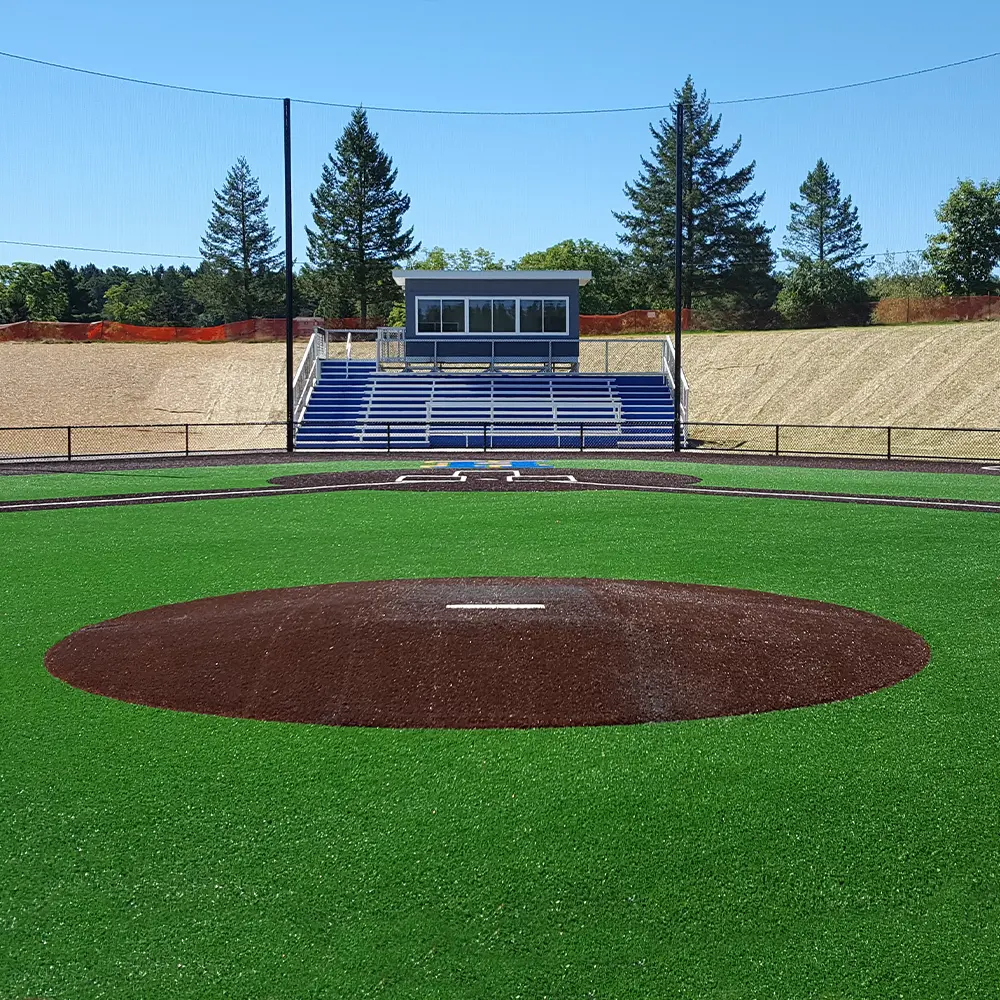
Image Source: www.sportsfield.com
The Geometry of the Pitcher’s Mound
The pitcher’s mound is not just a raised patch of dirt; it’s a carefully engineered platform designed to give the pitcher a strategic advantage. Its elevation forces the pitcher to throw downhill towards the batter, creating a steeper trajectory and making it harder for hitters to square up the ball. This elevation also plays a crucial role in the distance to home plate. While the actual distance from the pitcher’s rubber to home plate remains constant at 60 feet, 6 inches in professional baseball, the mound’s height alters the perceived distance and the angle of the pitch.
MLB Mound Specifications
Major League Baseball has strict regulations regarding the construction and dimensions of the pitcher’s mound. These standards ensure uniformity across all professional ballparks, providing a consistent playing environment for all teams.
Pitching Rubber Measurement
The cornerstone of the pitcher’s mound is the pitching rubber, also known as the pitcher’s plate. This rectangular slab of rubber is the legal spot from which the pitcher must deliver the ball.
- Dimensions: The pitching rubber measures 24 inches by 6 inches.
- Placement: It is centered on the pitcher’s mound.
- Height: As stated, the top of the pitching rubber is precisely 10 inches above the playing surface of home plate and the foul lines. This 10-inch difference is a crucial factor in the game’s dynamics.
Mound Diameter and Construction
Beyond the pitching rubber, the mound itself has specific characteristics:
- Diameter: The pitcher’s mound has a diameter of 18 feet.
- Construction: The mound is constructed with a specific slope to ensure a smooth transition from the flat playing field to the elevated pitching rubber. The slope is designed to be gradual, preventing injuries and allowing pitchers to maintain their balance. Typically, the mound slopes down to the playing surface in all directions from the front edge of the pitching rubber.
- Surface: The mound is typically covered with dirt or clay, providing a stable surface for pitchers to push off from.
These precise baseball mound construction details are vital for maintaining the integrity of the game.
The Impact of Mound Height on Pitching
The 10-inch elevation of the pitcher’s mound is not arbitrary. It has a significant impact on the game:
- Pitch Trajectory: A higher mound creates a downward angle for pitches. This means a fastball thrown at 90 mph will arrive at the plate with slightly more downward velocity than if thrown from a flat surface. This subtle difference can make it harder for hitters to achieve consistent contact.
- Pitcher’s Advantage: The elevated mound provides a distinct advantage to the pitcher. It allows them to see the batter more clearly and to generate more velocity and spin on their pitches due to the biomechanics of throwing downhill.
- Batter’s Challenge: For batters, the downward angle requires a different swing plane. They must adjust their approach to hit pitches that are coming from above.
Amateur Baseball Mound Differences
While MLB adheres to strict standards, amateur baseball, including youth leagues and college baseball, often has different specifications for pitcher’s mounds. These variations are generally made to accommodate younger or developing players.
Youth Baseball Mounds
In youth baseball leagues, such as Little League and youth travel ball, the pitcher’s mound is often lower or non-existent, especially for the youngest age groups.
- No Mound: For very young players (e.g., T-ball, U8 baseball), games are often played without a raised mound. Pitchers stand on the flat playing field.
- Reduced Height: As players get older, a mound might be introduced, but its height is typically less than the 10-inch MLB standard. Heights can range from 4 to 6 inches.
- Shorter Distance: Along with a lower mound, the baseball pitching distance is also reduced for younger age groups. For example, Little League pitching distance is 46 feet, compared to MLB’s 60 feet, 6 inches. This combination of factors makes the game more accessible and manageable for younger athletes.
- Pitching Rubber: Even in youth leagues, if a mound is present, a pitching rubber is used, though its placement and height will vary.
High School and College Baseball Mounds
High school and college baseball typically use a mound that is closer to the MLB standard, but there can still be slight variations.
- Near-MLB Height: Many high school and college fields aim to replicate the MLB mound height, often using 8 to 10 inches. However, some facilities might have mounds that are slightly lower, perhaps 6 to 8 inches, due to budget constraints or the nature of the facility.
- Pitching Distance: The baseball pitching distance is also standardized at different levels. High school baseball often uses the same 60 feet, 6 inches as MLB, while some governing bodies might specify slightly different distances for certain age groups within high school. College baseball universally uses the 60 feet, 6 inches distance.
- Infield Layout: The overall infield layout remains consistent across most levels of baseball, with the pitcher’s mound situated in the center of the infield, equidistant from first and third base, and halfway between second base and home plate.
Softball Mound Differences
It’s important to distinguish baseball mounds from softball mounds, as they have significant differences due to the nature of the sports.
- No Raised Mound in Fastpitch: In fastpitch softball, the pitcher’s box is not raised. Pitchers deliver the ball from a flat, designated area on the field, typically a rectangular box marked with chalk or paint. This is a fundamental difference from baseball.
- Pitching Distance: The baseball pitching distance is also very different from softball. In fastpitch softball, the pitching distance is 43 feet for women’s college and professional leagues, and 40 feet for high school and younger. This shorter distance, combined with the underhand pitching motion, creates a different strategic dynamic.
- Softball Mound Size: While there isn’t a raised mound in fastpitch, slow-pitch softball leagues may have a slightly elevated area or a marked pitcher’s plate, but it is not a significant raised structure like in baseball.
The softball mound difference is primarily the absence of a raised mound and the underhand pitching style.
The Science Behind the Mound’s Slope
The slope of the pitcher’s mound is as important as its height.
- Purpose of the Slope: The slope allows the pitcher to generate forward momentum while still pushing off the pitching rubber. It helps distribute the force generated by the pitcher’s stride and push-off, reducing stress on their legs and body.
- Controlled Descent: The gradual slope ensures a controlled descent from the rubber to the playing field, preventing sudden changes in the pitcher’s balance or stride.
- Pitching Rubber Placement: The front edge of the pitching rubber is typically positioned 60 feet, 6 inches from the back of home plate. From this point, the mound slopes downwards. The exact specifications for the slope might vary slightly, but the goal is a smooth, consistent transition.
Baseball Field Dimensions and the Mound’s Place
The pitcher’s mound is a central feature within the larger baseball field dimensions.
- Infield: The mound sits at the heart of the infield, approximately 60 feet, 6 inches from home plate.
- Foul Lines: The distance to home plate from the pitcher’s rubber is the same as the distance to the foul lines extending from home plate.
- Bases: The mound is positioned such that the line from the pitcher’s rubber to home plate passes through the center of second base, bisecting the angle formed by the lines from the pitcher to first and third base. This alignment is critical for the defensive positioning of infielders.
Considerations for Baseball Mound Construction
Building or maintaining a pitcher’s mound involves several considerations:
- Drainage: Proper drainage is crucial to prevent the mound from becoming waterlogged, which can lead to injuries or affect play.
- Material: High-quality clay and dirt mixtures are used to create a durable and stable surface.
- Maintenance: Regular maintenance, including raking, watering, and adding material, is necessary to keep the mound in optimal condition.
Visualizing the Pitcher’s Advantage
Imagine a pitcher standing on the 10-inch high rubber. When they throw a fastball, the ball starts 10 inches higher than if they were on a flat surface. This small elevation translates to:
- More Drop: The ball naturally drops due to gravity. Starting higher means the ball has more time to drop before reaching the plate, effectively increasing its downward movement.
- Steeper Angle: The angle of attack for the hitter is steeper. A hitter expecting a pitch at a certain height must adjust their swing to meet a pitch coming from a higher release point.
- Effect on Breaking Pitches: The mound’s height also influences the effectiveness of breaking balls, such as curveballs and sliders, giving them more pronounced break.
Frequently Asked Questions (FAQ)
Q1: Is the pitcher’s mound height the same for all baseball leagues?
No, the pitcher’s mound height can vary significantly between professional leagues (like MLB) and amateur leagues (youth, high school, college). MLB specifies 10 inches, while amateur leagues often have lower mounds or no mounds at all for younger players.
Q2: What is the distance from the pitcher’s mound to home plate?
In MLB and most professional and college baseball, the distance from the front edge of the pitching rubber to the back tip of home plate is 60 feet, 6 inches. This distance is shorter in youth baseball.
Q3: Why is the pitcher’s mound raised?
The pitcher’s mound is raised to give the pitcher an advantage by allowing them to throw downhill towards the batter, creating a steeper pitch trajectory and making it harder to hit.
Q4: What are the dimensions of the pitching rubber?
The pitching rubber, also known as the pitcher’s plate, measures 24 inches by 6 inches.
Q5: Does softball have a raised pitcher’s mound?
In fastpitch softball, there is no raised pitcher’s mound. Pitchers deliver the ball from a flat, designated pitching box.
Q6: How does the mound height affect a pitch?
The elevated mound causes a pitch to have a steeper angle and can contribute to more natural downward movement due to gravity. This makes it more challenging for batters to make solid contact.
Q7: Can I build a pitcher’s mound in my backyard?
Yes, you can build a pitcher’s mound in your backyard, but adhering to official dimensions and heights may require careful planning and construction. If you are building it for practice, you can adjust the height and distance to suit the player’s age and skill level.
Q8: Who decides the specifications for the pitcher’s mound?
In professional baseball, MLB dictates the mound specifications. In amateur leagues, governing bodies for youth baseball, high school sports, and college athletics set these standards.
Q9: What is the purpose of the slope on the pitcher’s mound?
The slope helps pitchers maintain their balance, generate forward momentum, and reduce stress on their legs as they push off the rubber.
Q10: How is the pitcher’s mound constructed?
The pitcher’s mound is typically constructed using a combination of dirt and clay, forming an 18-foot diameter circle with the pitching rubber centered on top. It is carefully sloped to ensure a smooth transition from the flat playing field.
In conclusion, the pitcher’s mound, with its precise height and construction, is a fundamental element of baseball that significantly influences the game’s dynamics. From the professional ranks of MLB to the various levels of amateur baseball, the specifications of the mound play a crucial role in shaping the strategic advantages of the pitcher and the challenges faced by the batter. Understanding these details, including the differences from softball mound difference and the variations in amateur baseball mound heights, provides a deeper appreciation for the intricate design of America’s favorite pastime.