
A baseball team has nine players on the field at any given time during a game. This number is consistent for both the offense and the defense.
The world of baseball, with its rich history and intricate rules, often sparks questions, and one of the most fundamental is: how many players on a baseball team? While nine players are on the field at any one time, the full baseball team size and the total number of players involved in a professional team are much larger. Let’s delve into the specifics of baseball roster size, the makeup of a team, and what it takes to field a squad ready for the challenge of a game. We’ll also explore the number of players in a baseball game from a broader perspective, considering the entire organization.
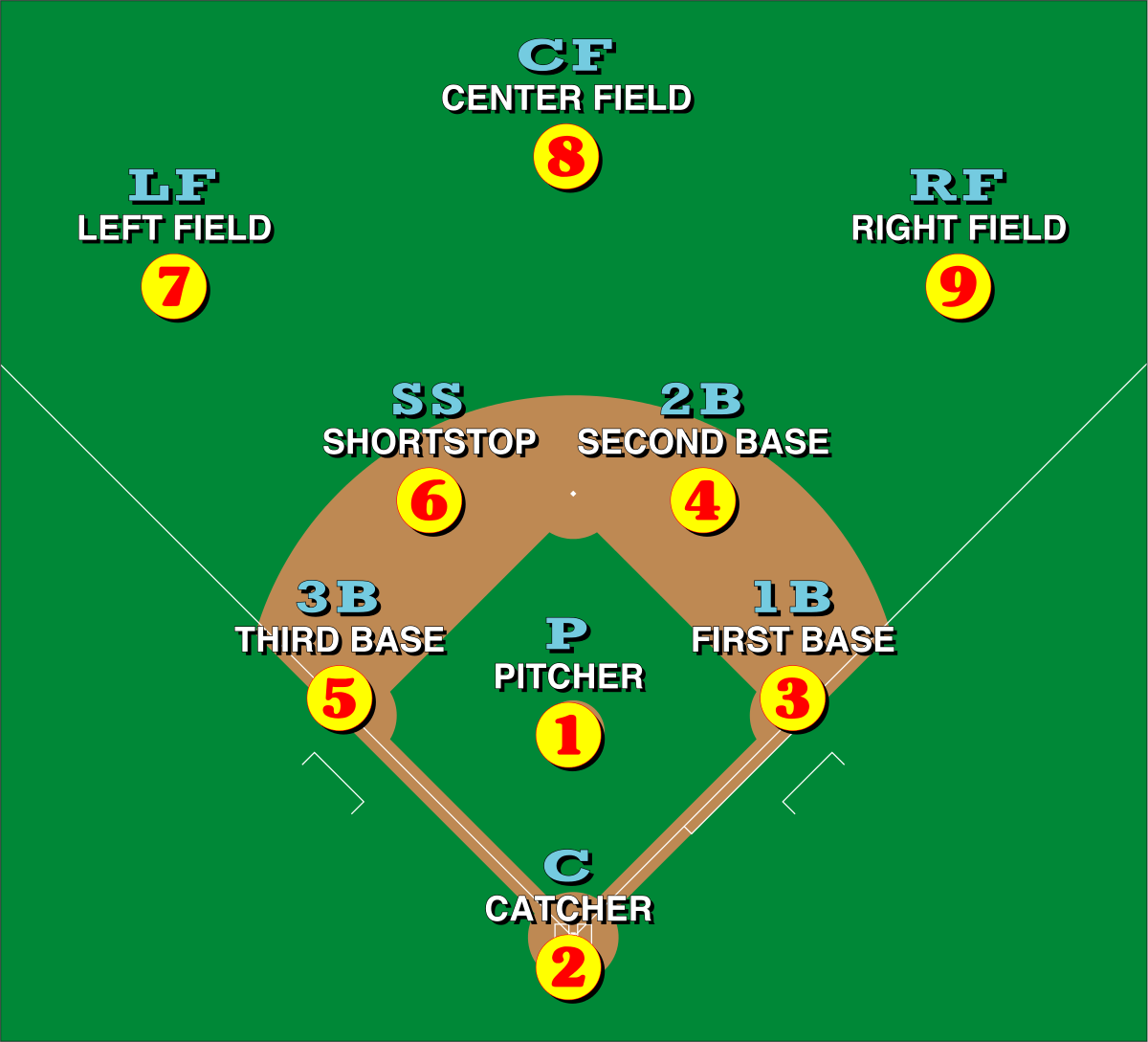
Image Source: upload.wikimedia.org
The Core of the Game: Players On The Field
When you watch a baseball game, you’ll see nine players from the defensive team positioned strategically across the diamond and outfield. These nine individuals are crucial to the team’s success, each playing a specific role.
Defensive Alignment: The Nine Pillars
The defensive nine are the backbone of the team’s ability to prevent the opposing team from scoring. Their positions are as follows:
- Pitcher: The player who throws the ball from the pitcher’s mound to the catcher. This is arguably the most important position, as they initiate every play.
- Catcher: The player positioned behind home plate who receives pitches and calls the game, signaling to the pitcher what type of pitch to throw.
- First Baseman: Covers first base and is responsible for fielding ground balls and making outs at first.
- Second Baseman: Covers second base and the area between first and second base. They are key in turning double plays.
- Third Baseman: Covers third base and the area between second and third base. This position often requires quick reflexes due to hard-hit ground balls.
- Shortstop: Positioned between second and third base. This is a highly demanding position, requiring excellent range and a strong arm to cover a significant area.
- Left Fielder: Covers the outfield area to the left of center field.
- Center Fielder: Covers the largest area of the outfield, requiring speed and good judgment to catch fly balls.
- Right Fielder: Covers the outfield area to the right of center field.
These nine players form the baseball lineup on defense, working together to get outs and end the opposition’s turn at bat.
Offensive Strategy: The Batting Order
On offense, the baseball lineup is also comprised of nine players. These are the hitters who take turns batting in a predetermined order, aiming to hit the ball and advance around the bases to score runs. The batting order is a critical strategic element, with managers carefully considering each player’s strengths and weaknesses when deciding who bats where.
Beyond the Diamond: Building A Full Baseball Team
While nine players are on the field, a professional baseball team size is significantly larger to account for substitutions, specialization, injuries, and the demanding schedule of a long season. This is where the concept of the baseball roster size comes into play.
Active Roster Baseball: The Daily Contingent
The active roster baseball refers to the players who are eligible to play in a specific game. This is the group of players a manager selects from for a given contest. The size of the active roster can vary slightly depending on the league and the stage of the season.
For Major League Baseball (MLB), the rules regarding roster size have evolved over time. Typically, an MLB team size for the active roster is around 26 players during the regular season. This allows for a mix of starting players, key reserves, relief pitchers, and specialized hitters.
- Starting Players: The nine individuals who typically begin the game.
- Bench Players: These players are available to substitute for starters when needed. They might be brought in for defensive reasons, to pinch-hit, or to replace a player who is injured or tired.
- Pitchers: A significant portion of the active roster is dedicated to pitchers, given the demands of starting games and pitching in relief. This includes starting pitchers, middle relievers, setup relievers, and closers.
- Specialists: Some players might be on the roster for specific skills, such as a pinch-runner or a defensive specialist.
The management of the active roster is a strategic dance, balancing the need for depth with the limitations of roster spots.
Expanded Roster and Minor League Systems
Professional baseball organizations often have more players under contract than are on the active roster. This includes players on the expanded roster (which used to be a larger group of players eligible in September) and those in the extensive minor league system.
- Minor League Affiliates: MLB teams have multiple minor league affiliates at various levels (e.g., Triple-A, Double-A, Single-A). These teams are crucial for player development, providing a pipeline of talent that can be called up to the major league team when needed. The total number of players within an organization can easily reach into the hundreds.
- Injured List (IL): Players who are injured and unable to play are placed on the Injured List. This frees up a roster spot on the active roster for another player to be called up, ensuring the team can field a full squad.
This deep pool of talent is essential for sustaining a team throughout a long season, which consists of many games played over several months.
The Structure of a Baseball Season and Game
To fully grasp how many players on a baseball team, it’s also helpful to understand the context of the season and the games themselves.
The Grind of the Season
A professional baseball season is a marathon. In MLB, teams play 162 regular-season games. This grueling schedule means that players are subject to wear and tear, making roster depth and the ability to make substitutions crucial.
Games and Innings
Each baseball game is divided into innings. Typically, a standard baseball game consists of nine innings. The team that scores more runs by the end of the ninth inning wins. If the score is tied after nine innings, the game continues into extra innings until one team has a lead at the end of a full inning. The baseball game duration can vary significantly, but a typical game lasts between three and four hours.
Baseball Positions: A Closer Look
The nine players on the field each have distinct responsibilities, and their skills are highly specialized. Understanding these roles helps appreciate why baseball team size extends beyond the nine on the field.
Infielders and Their Roles
- Pitcher: Needs a strong arm, control, and a variety of pitches. Also requires good fielding skills to handle bunts and comebackers.
- Catcher: Requires durability, a strong arm, and the ability to frame pitches effectively. Must also have a good understanding of game strategy.
- First Baseman: Needs good agility, a good glove, and the ability to stretch to field throws. Often a strong hitter.
- Second Baseman: Requires quickness, agility, and good hands. Essential for turning double plays.
- Third Baseman: Needs excellent reflexes, a strong arm, and the ability to field hard-hit balls. Often called the “hot corner.”
- Shortstop: Requires exceptional range, agility, a strong arm, and good decision-making. A demanding position both defensively and offensively.
Outfielders and Their Contributions
- Left Fielder: Needs a good glove and decent speed. Can be a more offensive-minded position.
- Center Fielder: Requires speed, good range, and the ability to track fly balls. Often considered the defensive anchor of the outfield.
- Right Fielder: Needs a strong arm to throw out runners at home plate or third base.
Strategic Considerations: The Baseball Lineup and Substitutions
The baseball lineup is not static. Managers make strategic decisions throughout the game to optimize their team’s chances of success.
- Pinch Hitter: A player who bats in place of another player, usually brought in for their hitting ability in a crucial situation.
- Pinch Runner: A player who runs the bases for another player, usually chosen for their speed.
- Defensive Substitution: A player who enters the game to improve the team’s defense, often in the late innings.
These substitutions are why having a deeper active roster baseball is so important. A manager can’t rely on just nine players to perform at their peak for an entire season.
League-Specific Nuances in Baseball Team Size
While the core concept of nine players on the field remains universal, baseball team size can see variations across different leagues and levels of play.
Little League and Youth Baseball
In youth leagues like Little League, the focus is on participation and learning. The number of players on the field is typically nine, but team sizes can vary significantly. Rosters might range from 12 to 15 players to ensure that most children get playing time.
High School and College Baseball
At the high school and college levels, baseball roster size often reflects the competitive nature of the sport. Teams might have anywhere from 20 to 30 players on their roster. This allows for specialized roles, particularly with pitching staffs and defensive specialists. The goal is to develop talent and compete for championships.
Professional Baseball (Beyond MLB)
Even within professional baseball outside of MLB, roster rules can differ. Minor league teams will have their own roster limits, often slightly smaller than the major league active roster, focusing on development and providing players for potential call-ups. Independent leagues and international leagues also have their own unique regulations regarding team size.
Frequently Asked Questions (FAQ)
Q1: How many players are on the field for one team in a baseball game?
A1: There are always nine players on the field for one team during a baseball game.
Q2: What is the typical MLB active roster size?
A2: The typical MLB active roster size is 26 players during the regular season.
Q3: Does every player on the active roster start the game?
A3: No, only nine players start the game in the baseball lineup. The remaining players are reserves available for substitution.
Q4: Can a baseball team have more than nine players on its roster?
A4: Yes, a professional baseball team has a much larger baseball roster size than just nine players to account for depth, specialization, and substitutions.
Q5: What is the purpose of having a large baseball team size beyond the nine on the field?
A5: A larger baseball team size allows for strategic substitutions, provides depth to cover injuries or player fatigue, and facilitates player development through the minor league system.
Q6: How many innings are in a standard baseball game?
A6: A standard baseball game consists of nine innings.
Q7: What is the average baseball game duration?
A7: The baseball game duration typically ranges from three to four hours.
In conclusion, while the image of baseball is often defined by the nine players strategically positioned on the diamond, the reality of a professional baseball team size is far more expansive. From the nine essential players forming the baseball lineup and defense, to the active roster baseball that fuels strategic decisions, to the vast network of minor league players, a robust organization is built to withstand the rigors of a long season and achieve victory. The numbers, rules, and strategies all contribute to the captivating complexity of America’s favorite pastime.